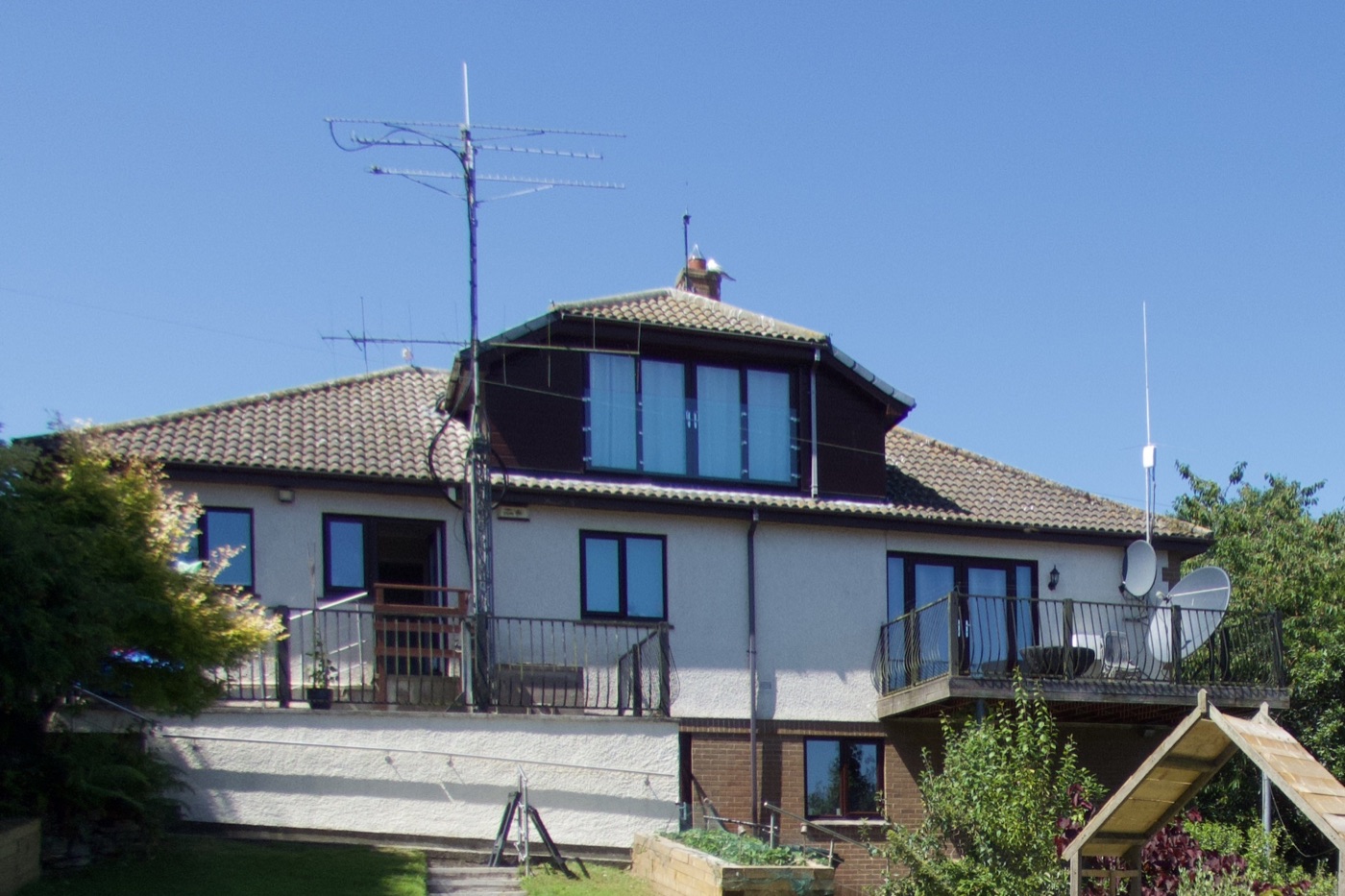
I'm Paul Andrews. Between the radio, the garden and the hi-fi there is not a great deal of spare time, and that suits me very well. Living where we do helps with all three — a hillside with a clear view for the aerials and the dish, a growing season that starts early and finishes late, and long winter evenings that are made for listening to music.
Amateur radio & amateur television
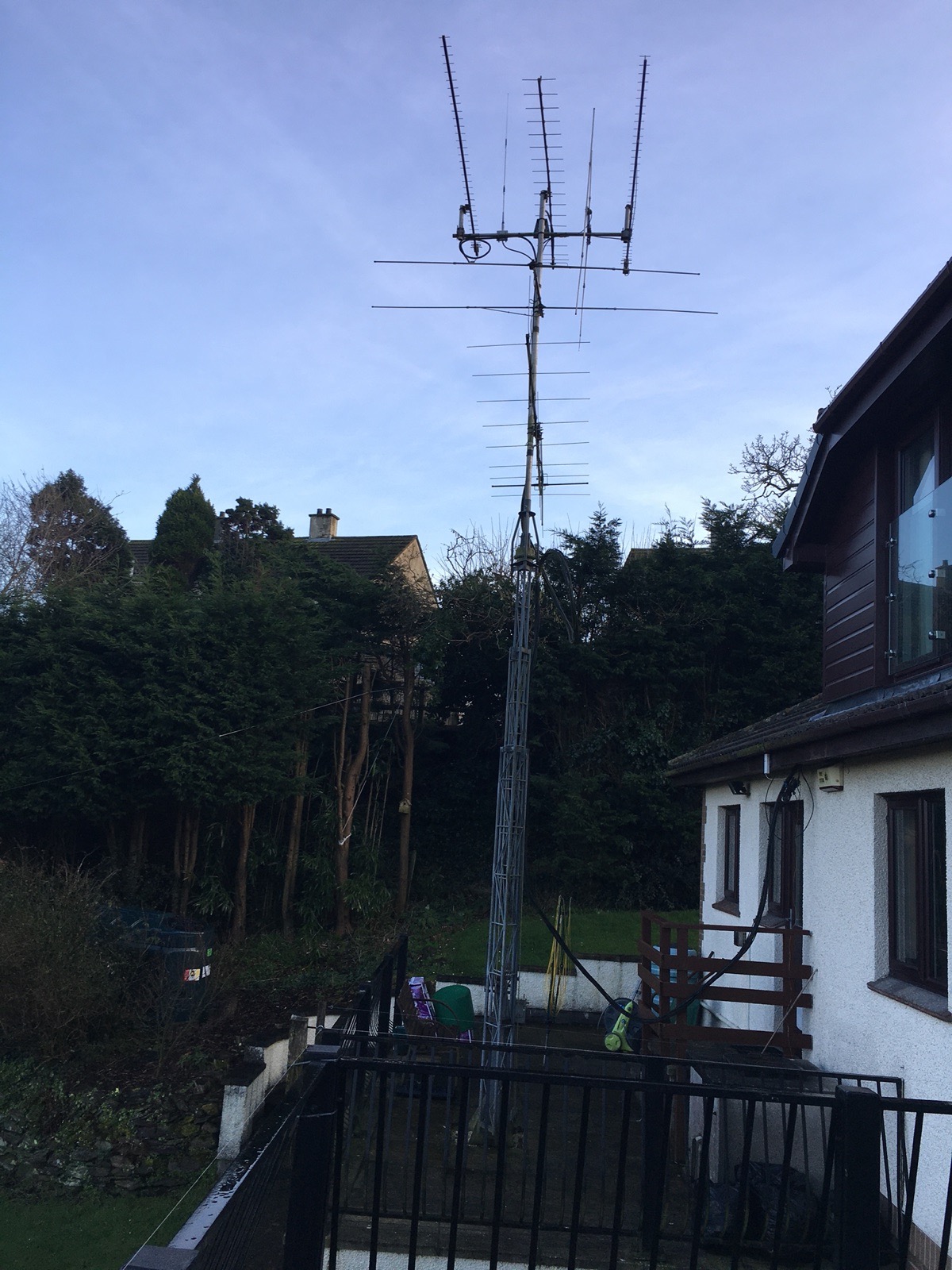
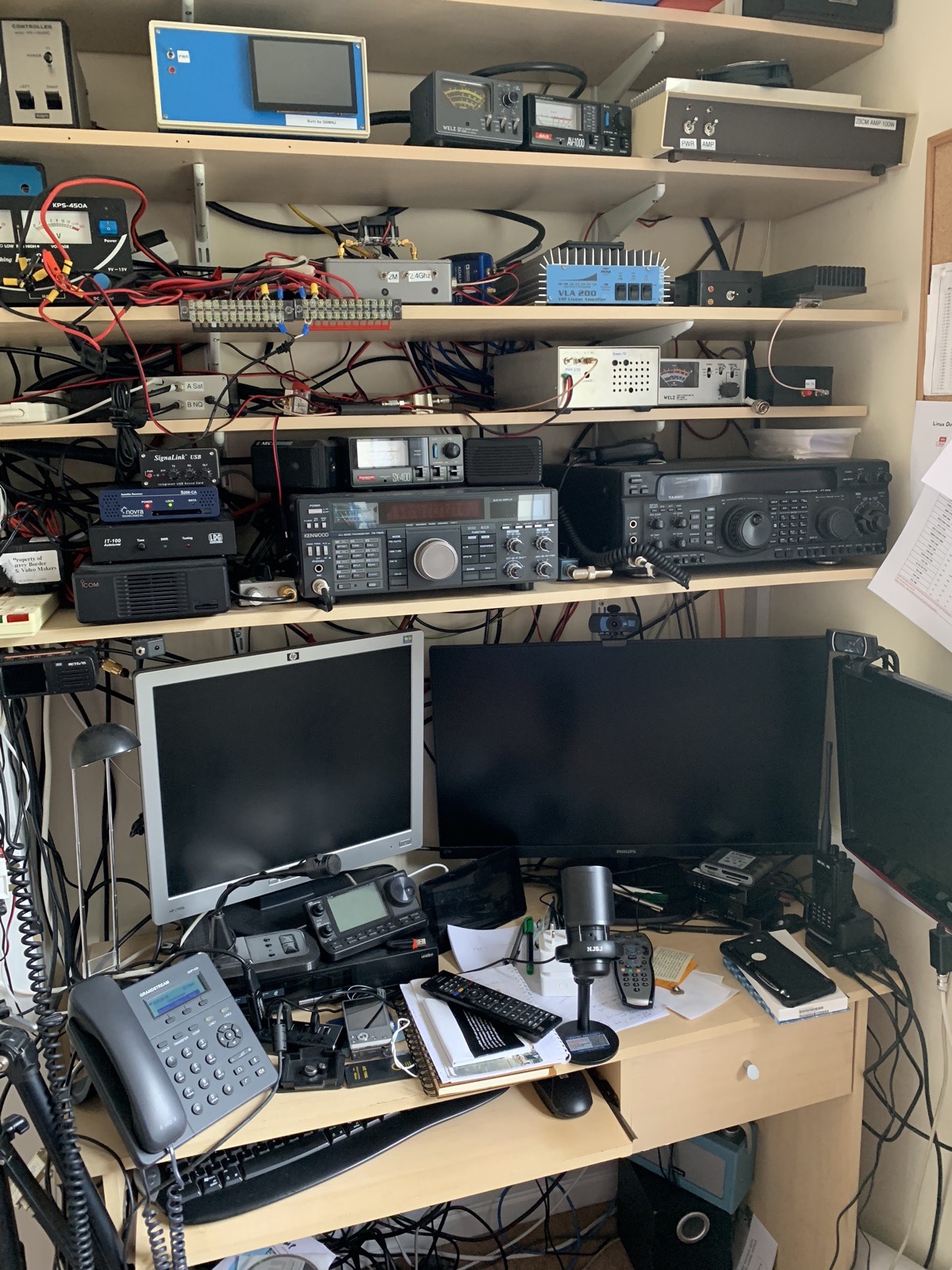
I have been a licensed radio amateur since 1982 — forty-four years — as G6MNJ, and for very nearly all of that time my real interest has been amateur television. Voice contacts are all very well, but there is nothing quite like seeing another station appear on the screen in front of you — picture, sound and all — knowing that everything between the two of us was built by amateurs.
ATV has changed almost beyond recognition over those four decades. What began as fringe-of-noise analogue pictures is now digital television, and a good digital signal either arrives properly or does not arrive at all. Some of us are quietly nostalgic about the snow.
British Amateur Television Club — member no. 27
I joined the BATC shortly after getting my licence, and I am still holding membership number 27 — which tends to raise an eyebrow or two when it comes up. The club has been the backbone of amateur television in this country for a very long time, and a great deal of what makes ATV possible today came out of members' workshops and sheds.
GB3NQ — the local ATV repeater
Most of my day-to-day activity goes through GB3NQ, our local amateur television repeater. Repeaters are what make ATV practical: they sit somewhere high with a good view, take in signals from stations around the area and put them back out again, so that everyone within reach can see everyone else rather than just the one station they happen to be pointing at.
It makes for a genuinely sociable way of operating. There is usually somebody about, and a session on the repeater tends to turn into a conversation with several stations at once — most of it, it must be said, about equipment.
QO-100 — television via a geostationary satellite
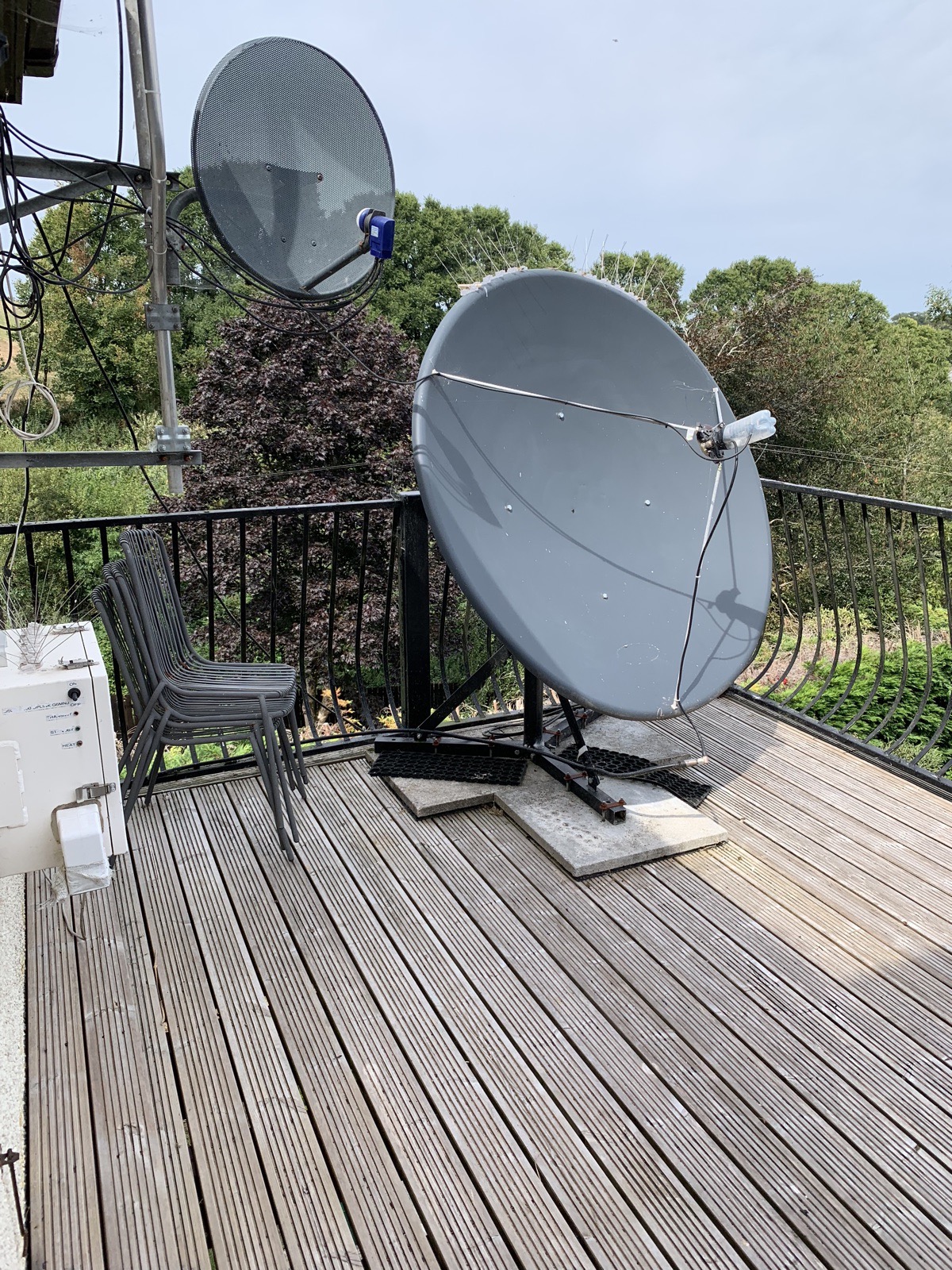
The other half of the hobby, and the part that still feels slightly like science fiction, is QO-100. It is an amateur radio payload aboard a geostationary satellite, sitting some 36,000 km above the equator — which means, unlike the low-orbit amateur satellites, it does not go anywhere. Point the dish once, get it right, and it stays pointed.
It carries a wideband transponder intended for digital television, and that is what I use. The uplink goes out on 2.4 GHz and the signal comes back down at 10 GHz, so the station needs a dish and a converter at each end of the path rather than anything you could call an aerial. The footprint reaches from South America right across to south-east Asia, which means a picture from a hillside in Cornwall can be watched over a third of the world at once.
Getting a station together for it is a proper project — the satellite is unforgiving about frequency and about how cleanly you transmit — and that is a good part of the appeal. Seeing your own picture come back down from space a quarter of a second later never really gets old.
Station details
| Callsign | G6MNJ |
|---|---|
| Location | Mevagissey, Cornwall |
| Locator | IO70og |
| Licensed since | 1982 — 44 years |
| Main interest | Amateur television (DATV) |
| Repeater | GB3NQ |
| Satellite | QO-100 wideband transponder |
| Member | British Amateur Television Club, no. 27 |
| Equipment | Mostly hand built |
What I enjoy most about it
- A good picture off the repeater on a quiet evening, and half a dozen stations all joining in.
- The engineering. ATV pushes you into microwaves, dishes and signal quality in a way that few other parts of the hobby do.
- Building it myself. Most of the equipment here is hand built, which is rather the point — you learn a great deal more from something you have made than from something you have bought.
- Watching the mode change completely over 44 years and still being at it.
- The people. Amateur television is a small world, and an exceptionally generous one with its knowledge.
If you have seen me on GB3NQ or through the satellite and would like to say hello, do get in touch.
The vegetable garden
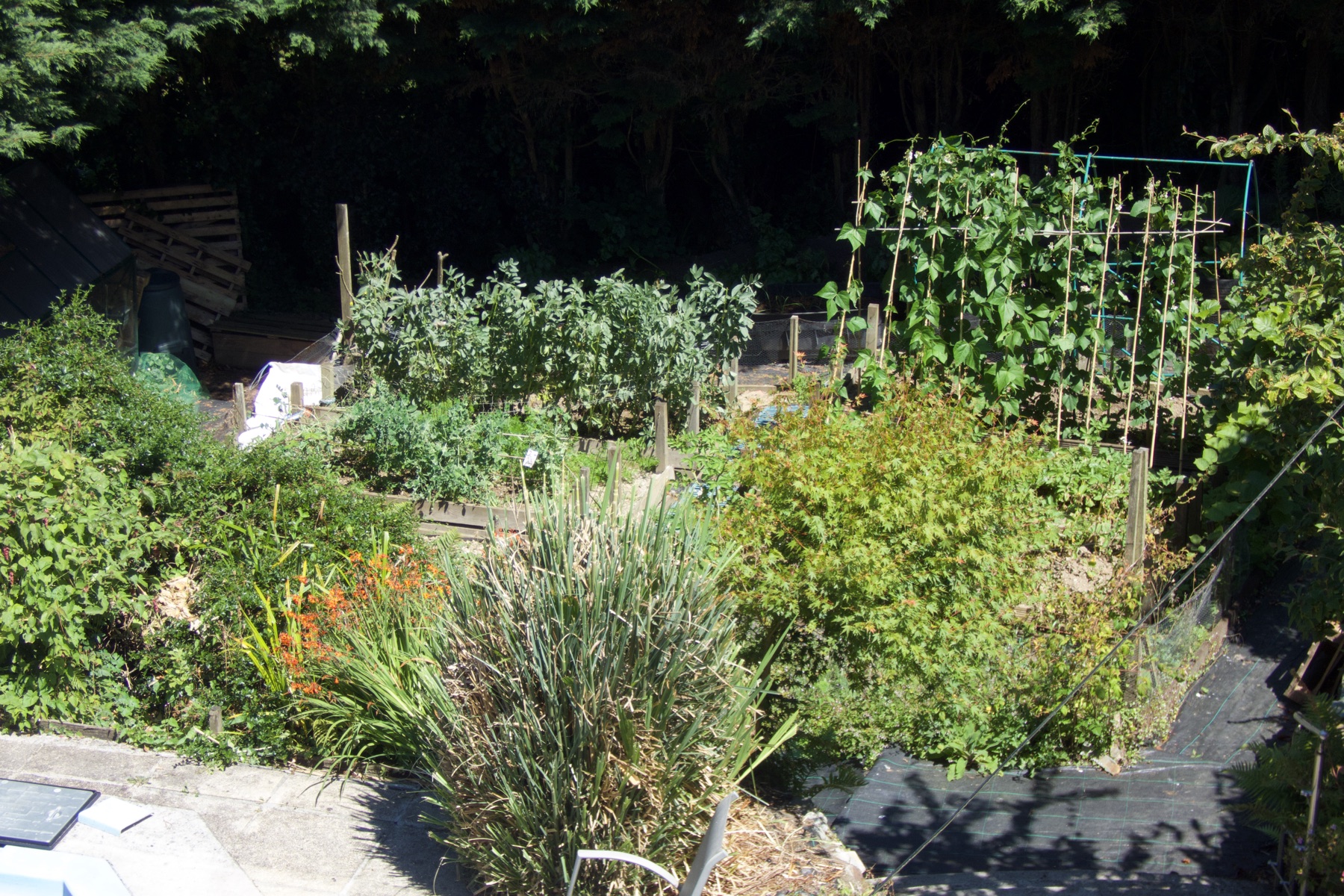
The vegetable plot is at the bottom of the garden, laid out in raised beds edged with timber. Raised beds earn their keep here: the ground drains better, the soil warms earlier in the spring, and the whole thing is a good deal kinder on the back. Something has gone in every year for as long as we have been here.
Cornwall is generous to a vegetable gardener. Frosts are few, the season is long, and things that need cloches elsewhere will often take their chances outside. The catch is the wind — salt-laden and persistent — so shelter matters more than anything else. Get the hedge right and the rest follows.
What grows here
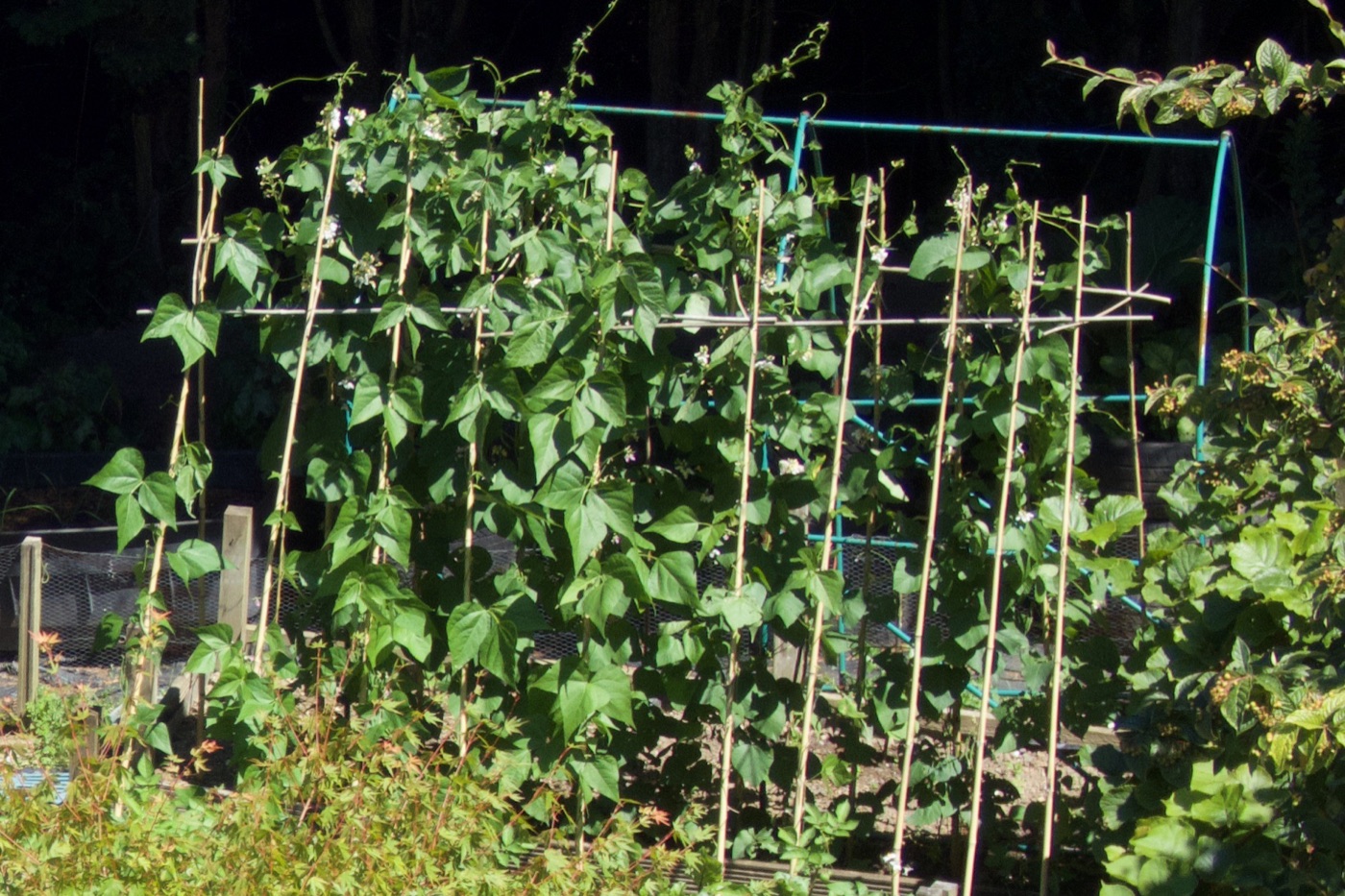
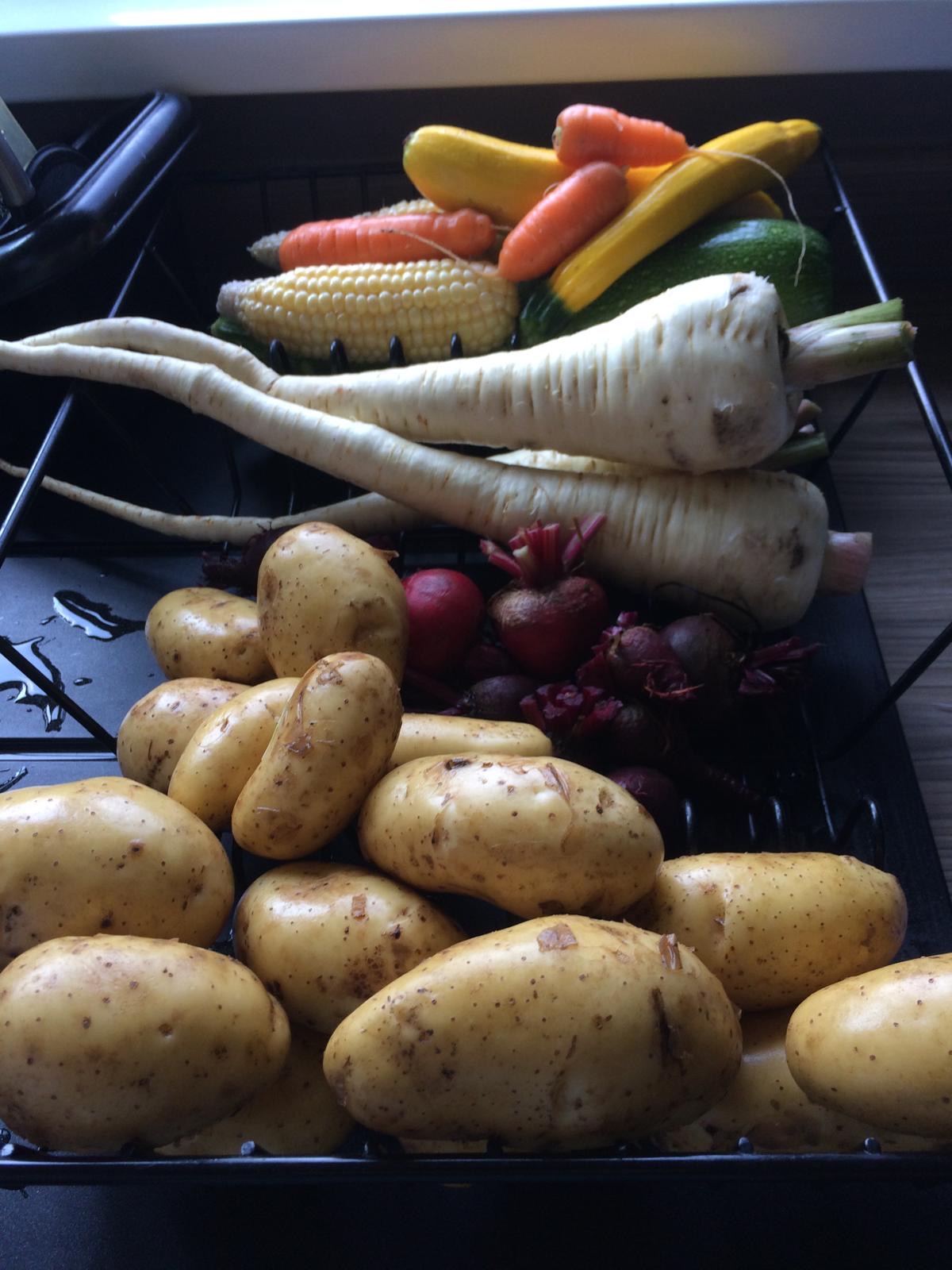
A fair spread, and it changes a little every year. The regulars are potatoes, french beans up their canes, sweetcorn, butternut squash, carrots, beetroot and leeks — with salad, brassicas under netting, onions and soft fruit filling in around them. The greenhouse takes care of the tomatoes and anything else that wants a warmer summer than Cornwall can reliably promise.
Sweetcorn and squash are the two that surprise visitors most. Both do perfectly well down here given shelter and enough water — and water, as it turns out, is the interesting part.
-
Spring
Early potatoes go in, the beds get their compost, and the seed trays take over every windowsill in the house.
-
Summer
Beans, beetroot and salad in quantity, sweetcorn coming up, and the water butts starting to go down at a rate that concentrates the mind.
-
Autumn
Main crop potatoes lifted, squash brought in to ripen, leeks standing ready, and the last of the soft fruit going into jars.
-
Winter
Digging, mulching, mending the netting, and reading seed catalogues with rather more optimism than experience would justify.
Water: 2,000 litres, downhill
A vegetable garden drinks a great deal in a dry August, and carrying it down the garden by can is a young man's game. So the plot has its own water supply: a rainwater collection system holding 2,000 litres, filled from the roof of the house and fed down to the beds.
The best part of it is that the house sits well above the plot, so the whole thing runs on gravity. No pump, nothing to fail, and no electricity involved — the water simply goes downhill to where it is needed. Cornwall is not short of rain in the winter, and the tanks are full long before anything needs watering.
Under construction: automatic irrigation
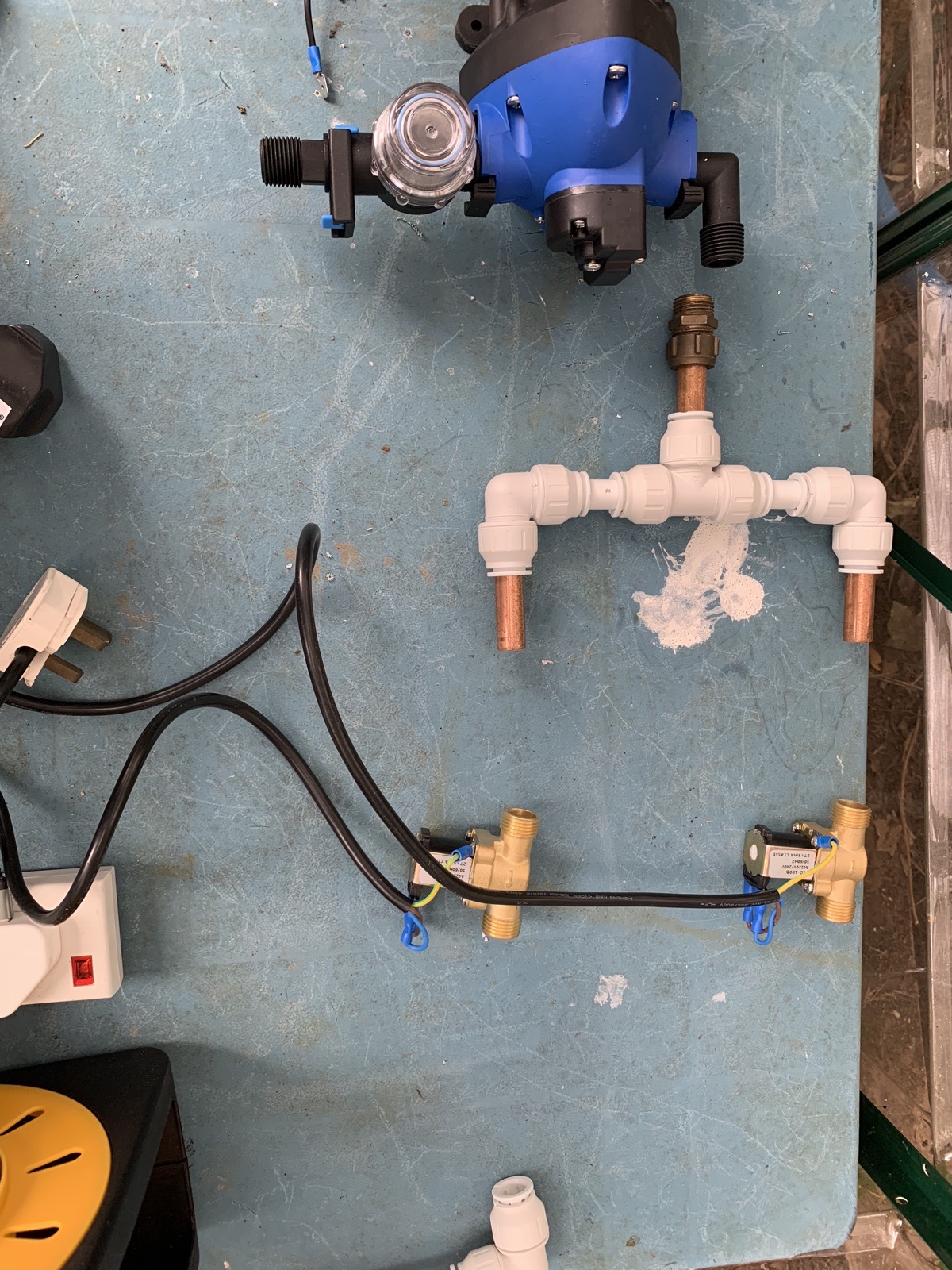
The current project is to take the watering out of my hands altogether. The system is being upgraded to computer-controlled irrigation, run from Home Assistant — covering both the greenhouse and the raised beds, each as its own watering zone.
The idea is straightforward: valves on each zone, controlled to a schedule that takes account of what the weather has actually done rather than what the calendar says, so the beds get what they need and the 2,000 litres are not wasted on a day when it has already rained. The greenhouse, which dries out fastest and matters most, gets watered little and often.
It is very much a work in progress. Half the appeal of a project like this is that it combines the two ends of the hobby — the electronics and the vegetables — and neither of them is ever quite finished.
Two things worth knowing about growing here
Shelter beats everything. A mild climate counts for nothing if a salt wind is stripping the leaves off in June. A good hedge or windbreak is the single most useful thing in a coastal garden.
Feed the soil, not the plants. Compost and well-rotted muck onto the beds every year, and most other problems get quieter.
Hi-fi
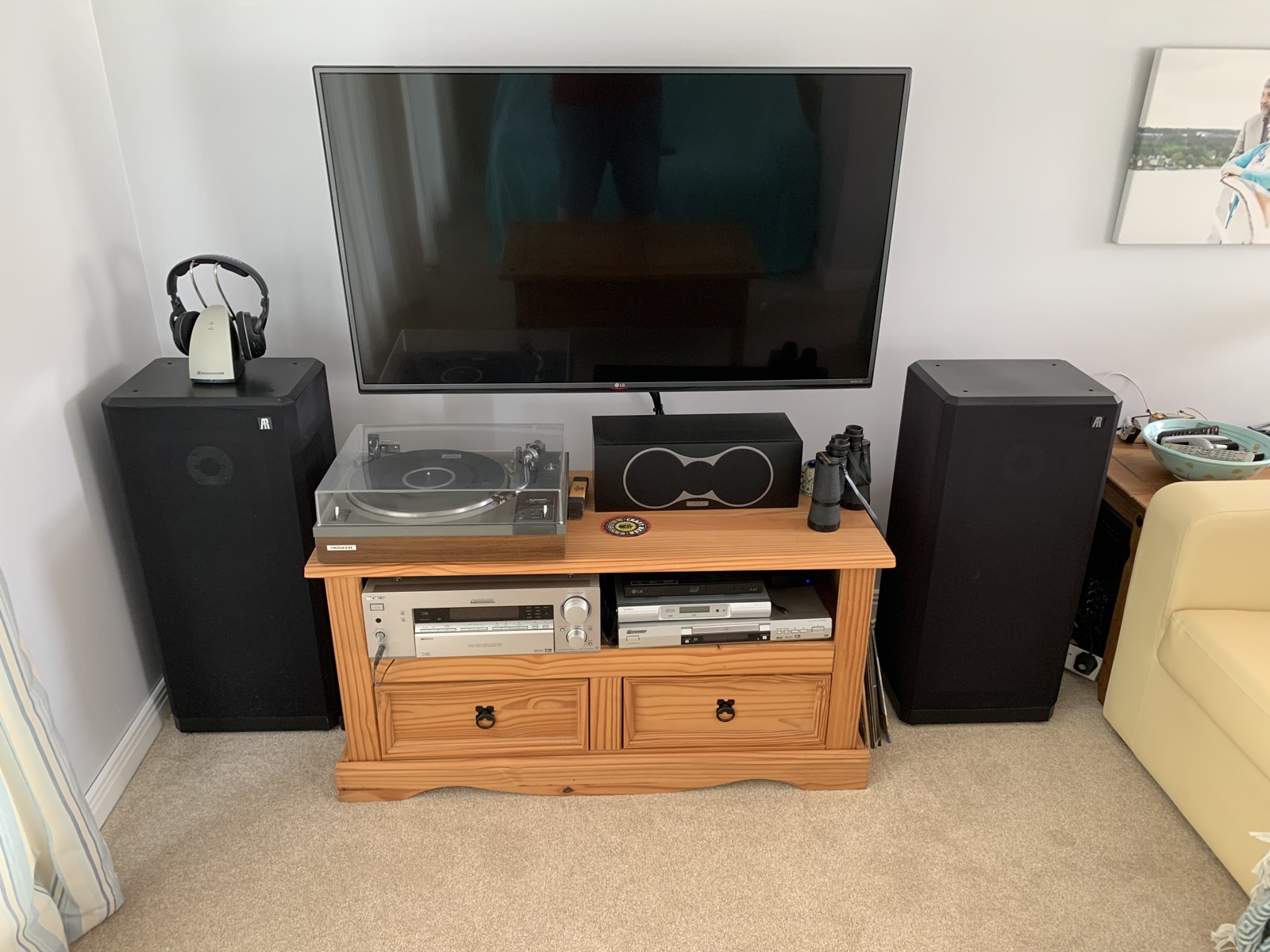
The third of my three interests, and the oldest of them. I have been chasing good sound for most of my life, and I am not convinced that anybody ever finishes.
What I am after is straightforward enough: a system that gets out of the way and simply lets the music happen. Everything else — the boxes, the cables, the arguments — is in service of that, however easy it is to forget.
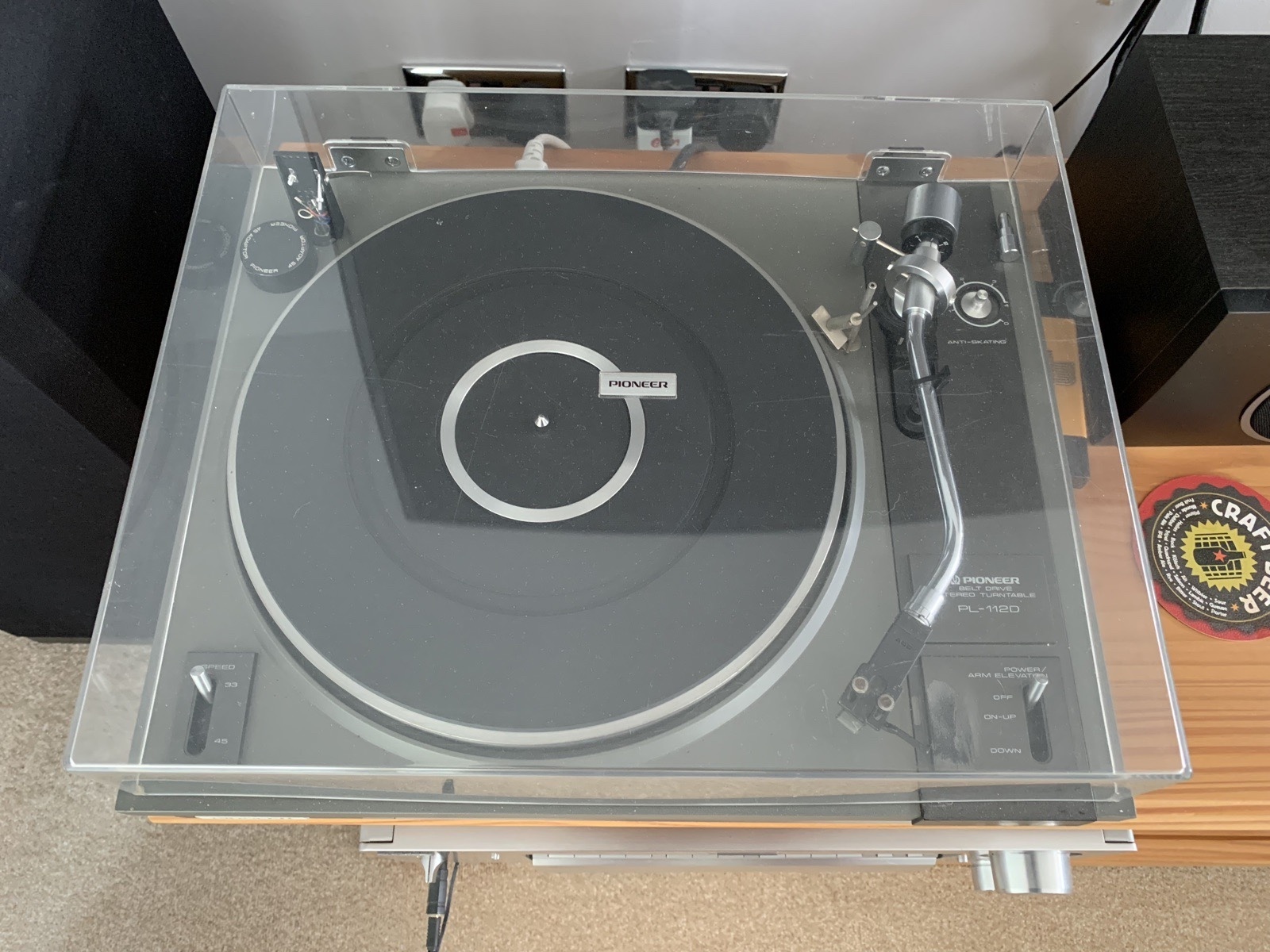
A good deal of listening here is still done from records. There is the ritual of it, certainly, but there is also the plain fact that a well set-up turntable playing a well-pressed record is a very hard thing to beat. That said, I am no purist — a decent digital source and a quiet room will make almost anything sound better than an expensive system in a bad one.
A few things I have come to believe
- The room matters more than most of the equipment in it.
- Loudspeaker placement is free, and worth more than most upgrades that are not.
- System matching beats chasing individual components.
- If you have stopped listening to the music and started listening to the system, something has gone wrong.