I'm Rachel Andrews. Living in Cornwall has been very good for the way I cook — fish landed a few minutes' walk from the house, and a vegetable garden that Paul keeps productive whether the kitchen can keep up or not. And when I am not cooking, I am very likely at the WI — three of them, as it turns out, and a trustee of the county Federation besides.
The WI
People who have never been to a WI meeting tend to arrive with a fixed idea of what one is like, and leave with a rather different one. Yes, there is cake. There is also a hall full of women of every age, running things, learning things and getting a surprising amount done.
It is one of the best things about moving somewhere new. If you want to belong to a place, join something in it — and the WI is a very easy thing to join.
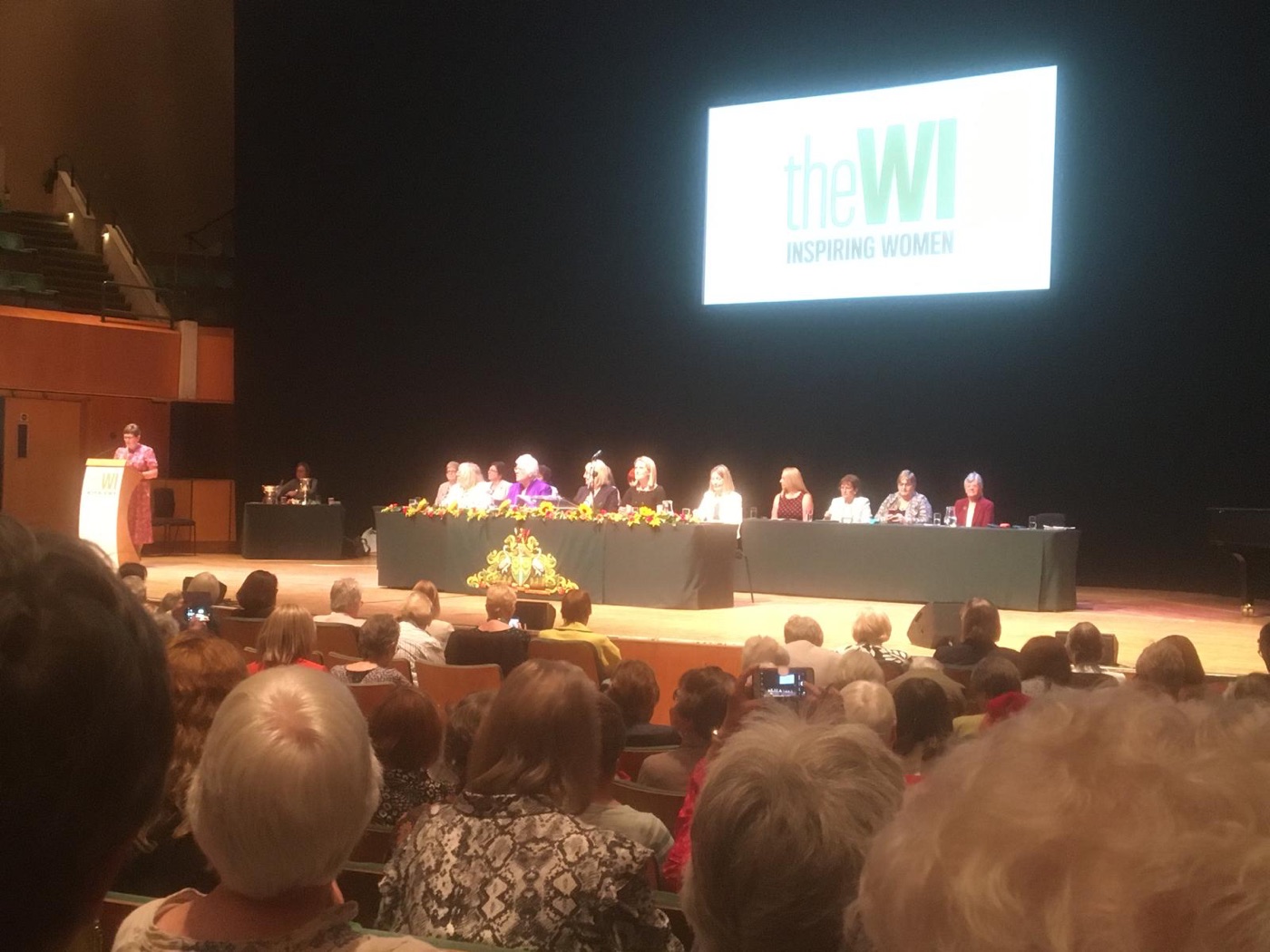
It is a great deal bigger than the monthly meeting, too. The photograph here is the National Annual Meeting in Cardiff — representatives from every Federation in the country gathered in one hall, which gives you a proper sense of the scale of the thing.
The three I belong to
Most members belong to one institute. I belong to three.
- Charlestown Flappers
- Grampound
- Cybercats — a virtual WI, which meets online rather than in a hall
The virtual one is a comparatively new idea and a very good one. It opens the WI up to anybody who cannot easily get to an evening meeting in a village hall — and it means members are not limited to whatever happens to be within driving distance of home.
Beyond my own institutes I am a Trustee of the Cornwall Federation, the county body that supports every WI in Cornwall. Being a trustee carries a share of the responsibility for how the Federation is run, which is rather more than simply turning up — but it does give you a view of the whole county, and of quite how much the WI gets done.
What we actually do
- Meetings. Eleven a year, one a month, and the range of them is the thing that surprises people most — serious environmental issues one month, pure entertainment the next, and a great deal in between. There is always time to talk afterwards.
- And in between. Informal get-togethers between the monthly meetings, which is where a good deal of the real friendship happens.
- Smaller groups. Each WI has its own subgroups, covering wider interests than a single monthly meeting ever could. They are set up and run by the members themselves, for whatever that particular group is keen on — so there is nearly always something going on besides the main meeting.
- Outings. Rather more varied than people expect. Gardens, where the staff come out and talk to you about what they are growing; historic houses, with somebody on hand to tell you about the family that built the place. And a good deal that is purely for the fun of it — bowling, a winery, a gin distillery, boat trips, museums, art galleries, and plenty of other interesting places besides.
- Across the county. Beyond your own institute, the Federation puts on events for members from every WI in Cornwall, on a very wide range of subjects.
- Raising money. Each WI is a charity in its own right. As well as keeping our own show on the road, we try to support the wider community — raising money and donating it to other charities within our own village.
- Speaking up. More than a century of campaigning, and still going. Rather less jam and jerusalem than the phrase would have you believe. More on this below.
Campaigning
The WI was established in Wales in 1915, and for more than 110 years it has campaigned on the issues that affect women particularly. The record is a good deal longer than most people realise.
- Votes for Women
- Keep Britain Tidy
- Better housing
- Equal pay
- Violence against women and girls
- And a long succession of women's health problems that governments have ignored or pushed to the margins
How a resolution works
Resolutions are written by members — they start with ordinary women in ordinary institutes, not with a head office. A panel of members then draws up a shortlist.
That shortlist goes to the NFWI Annual Meeting — the National Federation of Women's Institutes — where it is voted on by representatives of each Federation. That is the meeting in the photograph above.
It is a genuinely democratic route from a conversation in a village hall to a national campaign, and it is the part of the WI I would most want people to understand.
Thinking of coming along?
New members are genuinely welcome, and you do not need to know anybody or be able to do anything in particular. Come to a meeting as a visitor first and see what you think.
If you are near enough, Charlestown Flappers and Grampound would both be glad to see you. And if getting out to a hall on a dark evening is the difficulty, Cybercats meets online — distance is no obstacle at all.
Meeting times and venues for every institute in the county are listed on the Cornwall Federation website — that is the place to look for whichever WI is nearest to you. For the organisation nationally, see thewi.org.uk.
In the kitchen
I am not a cook who follows recipes to the letter. I cook the way most people do who cook a lot — starting from what is good that week and working outwards.
What I do not do a great deal of is traditional Cornish cooking. I have lived in a good many places over the years and travelled a good deal more widely than that, and it shows. The ingredients here are Cornish; the ideas come from all over. Local produce is where a meal starts, not what decides it.
Mevagissey is a fishing village, and that does show on the table. Through the summer we buy from the fish stall down on the harbour — mackerel, crab, and whatever has come in that day. Add Cornish new potatoes in the early season and the vegetable plot at the bottom of the garden, and there is not much missing.
I should say that I cook without dairy — I am allergic to it — so there is no butter or cream in this kitchen. It sounds like a limitation and it really is not. If anything it pushes you towards the ingredients themselves, which is no bad place to be pushed.
What we do not grow, we try to buy close to home. The meat comes from local butchers and the bread and bakery from local bakers, which in this part of Cornwall is no hardship whatever.
Baking
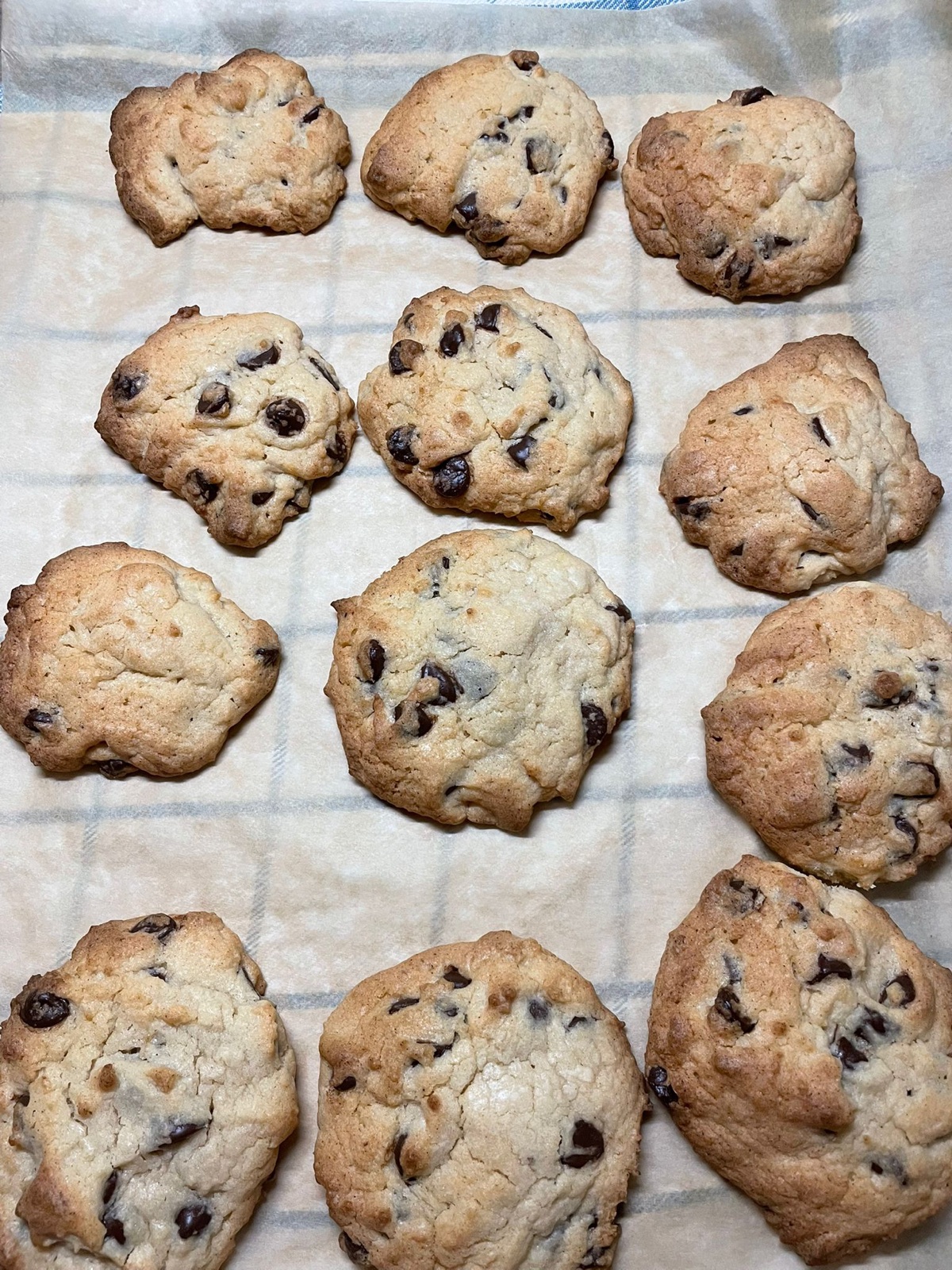
Biscuits and pies, mostly, and every so often a dairy-free cake. Baking without dairy takes a bit of working out to begin with; after that it is simply how you bake.
Apple pies and rhubarb crumble are the two that come round most often — both of them, conveniently, made from things growing a short walk from the back door.
What we do with a glut
Growing your own means periodically having a great deal more of something than two people can get through. Most of the surplus goes one of two ways: into the freezer, or out to friends. Both are better than watching it go over.
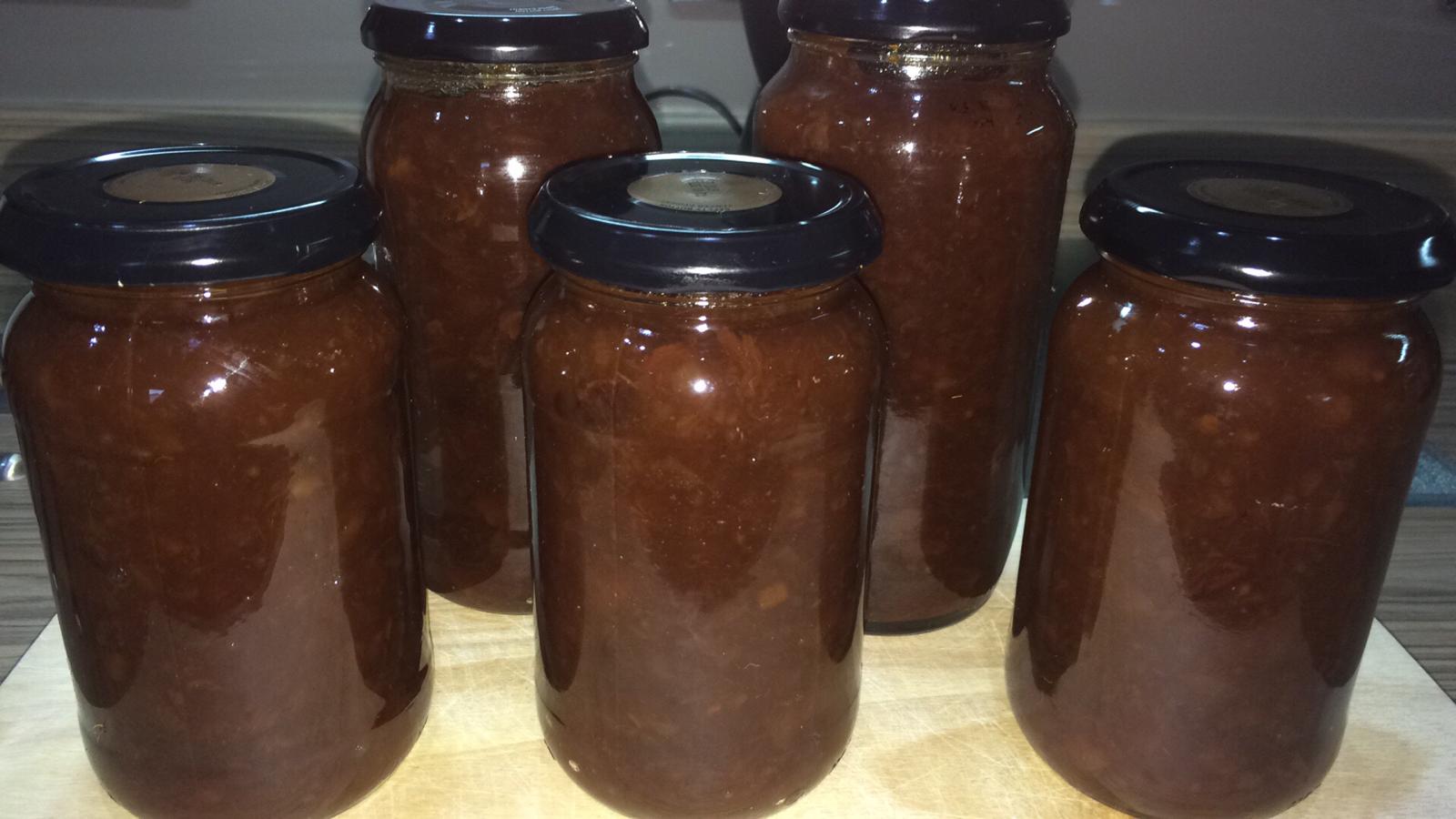
The rest becomes chutney — a good variety of it, and all from garden produce rather than the hedgerows. I do not make jam or cordials; chutney is the one I keep coming back to, and by February, with the plot doing nothing much, you are very glad of every jar.
-
Spring
New potatoes, the first of the salad, and early rhubarb — which means the first crumble of the year. Easter here is about family gathering and chocolate rather than anything I have to bake.
-
Summer
Seafood from the stall on the harbour, beans and courgettes in quantity, and more salad than two people can reasonably eat.
-
Autumn
Apples off the tree, chutney weekend, and the freezer filled up for the winter.
-
Winter
Stews, soups, the chutney jars steadily emptying, and a good deal of biscuit-making in the run-up to Christmas.
Chocolate brownies
Dairy-free, by necessity rather than fashion — plant butter does the job perfectly well here, and nobody has ever noticed. Makes one shallow tin, cut into as many pieces as your conscience allows.
Ingredients
- 250g plant butter
- 250g dark chocolate I use 100g dark chocolate, 50g cocoa powder and 100g chocolate chips — but another type of chocolate would do.
- 3 medium eggs
- 275g caster sugar
- 125g self-raising flour
- 1 tsp vanilla extract Added to the egg mix.
- A pinch of sea salt
Method
- Grease a shallow baking tin, roughly 20 × 25cm, and line it with greaseproof paper or baking parchment. Leave a little around the edge — you will use it later to lift the hot mix out of the tray. Heat the oven to 180°C, or gas mark 4.
- Break the chocolate into squares into a Pyrex bowl and melt it with the butter: over a pan of boiling water, in the warming oven of an Aga, or a minute in the microwave. Once melted, add the cocoa powder and mix.
- Whisk the sugar and eggs together, and add the vanilla extract.
- Beat in the melted chocolate until smooth, then add the chocolate chips.
- Combine the salt with the flour and sift it over the chocolate mix, folding it in with a metal spoon. Be careful not to over-mix, or the brownies will be tough.
- Pour the mix into the tin and smooth the top with a spatula.
- Bake for 25–30 minutes. They are ready when the middle is no longer liquid and a blade comes out with a few crumbs clinging to it. Do not over-bake or they will be dry.
- Lift them out in the parchment onto a cooling rack. While the mixture is still warm but not scalding, cut the slab into slices the size you want to serve.